Kasol Travel Guide: Where to Stay, What to Do and How to Reach
Plan a relaxed Kasol holiday with this practical guide to reaching the Parvati Valley, choosing the right village, finding stays, planning walks and budgeting responsibly.

Quick answer
This kasol travel guide helps first-time visitors plan a 3–4 day break in Himachal Pradesh’s Parvati Valley. Reach Kasol by road via Bhuntar, stay in Kasol, Chalal, Manikaran or quieter nearby villages, and use local taxis or walks for short excursions. Prioritise Parvati River viewpoints, Manikaran, Chalal and a suitable trek such as Tosh or Kheerganga. Carry cash, warm layers and sturdy shoes, and confirm road, weather, trek and permit conditions before leaving.
Key facts at a glance
| Best time to visit | March–June and September–November; winter is quieter and colder |
|---|---|
| Ideal duration | 3–4 days for Kasol, Manikaran and one village walk |
| Nearest airport | Bhuntar Airport, approx. 31 km; flights can be weather-dependent |
| Nearest railway station | Joginder Nagar railway station, approx. 125 km by road |
| How to reach | Bus or taxi from Bhuntar; approx. 1.5–2.5 hours by road |
| Approx. budget per person | ₹6,000–₹14,000 for 3 nights, excluding long-distance travel |
| Altitude | Kasol is at approx. 1,580 m above sea level |
| Permits needed | Usually no permit for Kasol; route-specific rules may apply on treks |
A well-planned Kasol travel guide is useful because the destination is not just one village. Kasol is a road-accessible base in Himachal Pradesh’s Parvati Valley, with riverside cafés, forest paths and several settlements spread along the valley. First-time visitors should decide whether they want easy walks, a trek, quiet accommodation or a social backpacker atmosphere before booking a room. This guide covers routes, Kasol villages, stays, food, connectivity, costs and responsible travel without treating the valley as a party-only destination.
Why visit Kasol and how long should you stay?
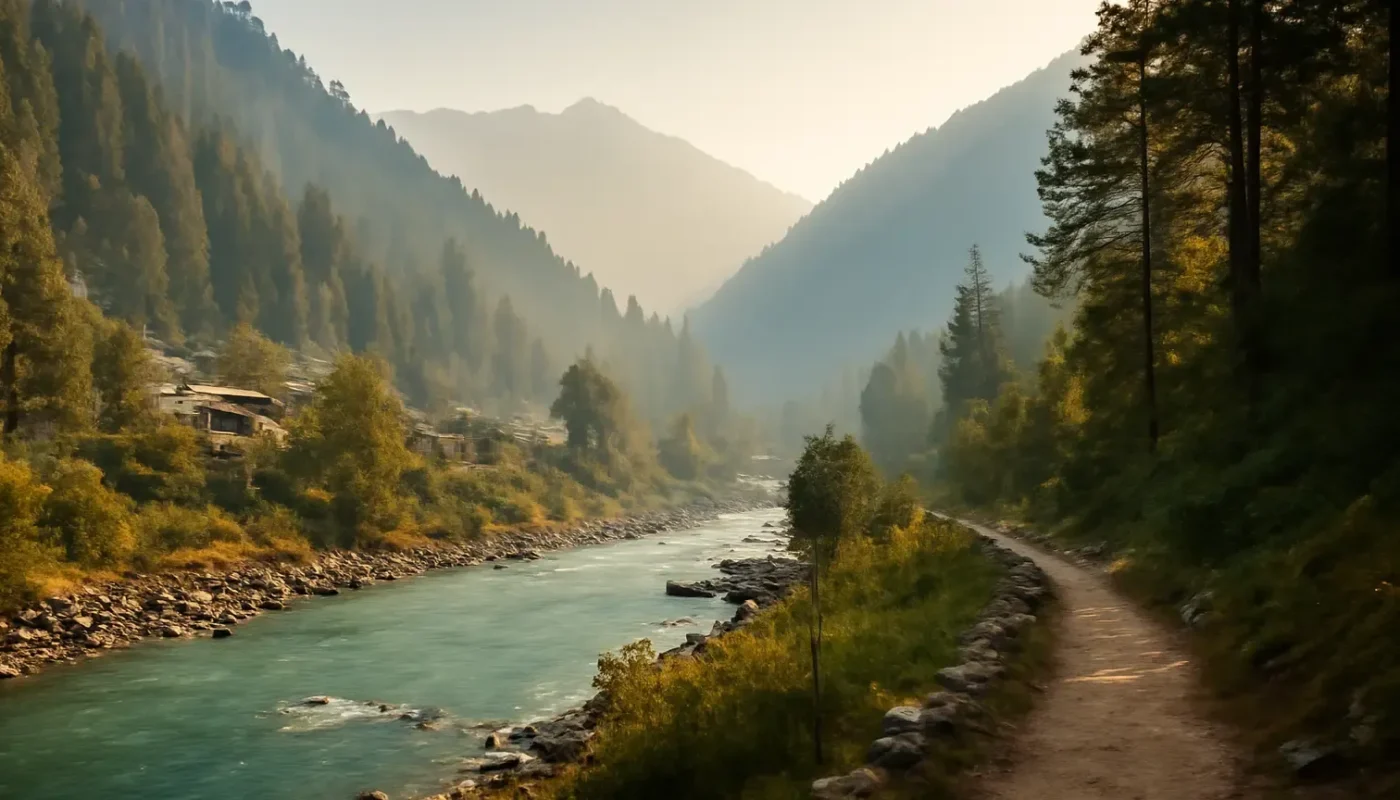
Kasol lies beside the Parvati River in Kullu district, at an altitude of approximately 1,580 metres. It suits travellers who want mountain scenery without committing to a high-altitude expedition. The main market is compact, while forest trails lead towards Chalal and the road continues to Manikaran, Tosh and other valley settlements.
For most first visits, three nights are enough for Kasol, Manikaran and one easy village walk. Add a fourth or fifth night if you want a longer trek, a slower café-and-reading break or a stay outside the busy centre. The valley is less suitable for travellers seeking luxury resorts, dependable late-night transport or a tightly scheduled sightseeing circuit.
How to reach Kasol from Delhi: air, rail and road options
How to reach Kasol from Delhi?
To reach Kasol from Delhi, take a bus or private vehicle towards Bhuntar and continue by local bus or taxi on the mountain road to Kasol. The total road distance is approximately 510–550 km, and the journey commonly takes around 14–18 hours depending on traffic, stops, roadworks and weather.
- By bus: An overnight Delhi to Kasol bus, usually booked to Bhuntar or nearby Kullu, is often the simplest option. From Bhuntar, allow approximately 1.5–2.5 hours to Kasol by local bus or taxi. Timings, boarding points and fares vary by operator and season.
- By air: Bhuntar Airport, also called Kullu–Manali Airport, is the closest airport at approximately 31 km from Kasol. Flight frequency can be limited and weather may affect operations. Pre-arrange a taxi or check local transport at the airport; shared vehicles may not be available at every arrival time.
- By rail: Joginder Nagar railway station is the closest practical narrow-gauge station, approximately 125 km from Kasol by road. The journey onward can take roughly 4.5–6.5 hours. Chandigarh and Pathankot may offer more useful broad-gauge connections, but the remaining road journey is substantially longer.
- By car: A private taxi offers flexible stops at Kullu, Bhuntar and viewpoints but costs more. The final road follows the Parvati Valley and includes bends, so avoid assuming that a short map distance means a fast drive.
Check Indian Railways or IRCTC for rail availability and the relevant airport for flight status. Before departure, confirm road conditions with local administration or your accommodation, particularly after heavy rain, snowfall or landslides.
Best time to visit Kasol: weather by season
What is the best time to visit Kasol?
The best time to visit Kasol for a first trip is generally March to June or September to November, when daytime conditions are pleasant for walks and roads are usually more convenient than in peak winter. The right month depends on whether you prioritise greenery, trekking or fewer visitors.
| Season | What to expect | Best for | Trade-offs |
|---|---|---|---|
| March–June | Mild days, cool evenings and improving trail conditions | Village walks, cafés and beginner-friendly outings | Popular weekends can raise room and taxi prices |
| July–August | Monsoon rain, lush hills and changing road conditions | Flexible travellers who accept delays | Treks, roads and river-side paths may be disrupted |
| September–November | Clearer post-monsoon views and crisp evenings | Photography, hikes and quieter stays | Temperatures fall quickly after sunset |
| December–February | Cold nights and possible snow or icy sections higher up | Quiet escapes and winter atmosphere | Some stays or routes may operate with limited services |
Kasol weather changes quickly in the mountains. Carry a rain layer even in otherwise dry months, and do not plan a trek solely from a social-media photograph. Ask locally about stream crossings, trail damage and return times.
Where to stay in Kasol and nearby villages
Where to stay in Kasol?
Where to stay in Kasol depends on your preferred balance of access, quiet and walking. Book the first night in advance if arriving late, during a festival period or on a long weekend; then change areas only if the road and luggage logistics suit you.
- Kasol market: The most convenient base for cafés, groceries, buses and basic services. It is lively and can be noisy, especially near the main road. This suits solo travellers and first-time visitors who want easy access.
- Riverside outskirts: Guesthouses and camps outside the centre can offer more space and views. Check whether the property is genuinely accessible by vehicle, whether the path is lit and whether monsoon conditions affect the riverbank.
- Chalal: A short walk from Kasol, Chalal offers a quieter forest setting and small homestays. It is better for travellers comfortable carrying luggage on foot; confirm the walking route and availability of electricity before booking.
- Manikaran: This is useful for visitors who want proximity to the hot springs and Manikaran Sahib Gurudwara rather than Kasol’s café scene. It is approximately 6 km from Kasol by road.
- Tosh and nearby hamlets: Choose these only if the village itself is the main attraction. The road and final walk can be inconvenient with large bags, and services are more limited than in Kasol.
Kasol hostels, guesthouses, homestays and camps cover a wide price range. For a basic room or dorm bed, budget approximately ₹500–₹1,500 per person per night in quieter periods; mid-range rooms may cost around ₹1,500–₹4,000 per room, with weekends and peak months higher. Treat these as planning ranges, not fixed rates, and verify heating, hot water, power backup, cancellation rules and taxes before paying.
Things to do in Kasol: walks, villages and day trips
The best things to do in Kasol are a mix of short walks, cultural visits and carefully chosen treks. Build in time to return before dark rather than trying to cover every village in one day.
- Chalal village walk: Follow the local trail from Kasol for a relatively short outing. Wear shoes with grip, avoid loud music and do not enter private land without permission.
- Visit Manikaran hot springs: Combine the hot springs area with a respectful visit to Manikaran Sahib Gurudwara. Cover your head where required, follow photography guidance and avoid treating religious spaces as photo props.
- Explore Tosh: The Tosh Valley trek is better understood as a village-and-valley hike than a single uniform trail. The final approach may be steep, and conditions vary. Use local guidance if weather changes.
- Consider Kheerganga: The Kheerganga trek is more demanding than a casual Kasol walk. Trail access, safety guidance and local rules can change, so verify current conditions before setting out and use a registered local guide where appropriate.
- Ask about Malana: Malana has distinct customs and community rules. Visitors should follow signs and local instructions, avoid touching homes or religious objects, and never photograph people without consent.
- Enjoy the Parvati River landscape: Sit at a safe, designated viewpoint rather than approaching unstable banks. The current can be strong even when the water looks calm.
Longer routes such as Pin Parvati Pass are serious mountain expeditions, not casual extensions of a Kasol holiday. They require appropriate fitness, equipment, acclimatisation, logistics and experienced support.
Kasol itinerary for a first trip
Day 1: Arrive and settle in
Arrive from Bhuntar, check into your accommodation and keep the first afternoon unhurried. Walk through the market, identify the bus stand and taxi points, and eat an early dinner if you have travelled overnight. A short riverside viewpoint visit is preferable to starting a trek immediately.
Day 2: Kasol and Chalal
Take the Chalal village walk in the morning, allowing extra time for photographs and rest. Return to Kasol for lunch, browse local shops and keep the evening free. If the trail is wet or you are carrying heavy luggage, replace the walk with a nearby road-side outing.
Day 3: Manikaran or a suitable trek
Visit Manikaran and its hot springs, or choose a trek only after checking weather and trail conditions. Travellers with limited hiking experience should choose a shorter route instead of forcing a Kheerganga or Tosh plan.
Day 4: Buffer morning and departure
Keep the final morning flexible for delayed buses, rain or a slow breakfast. Leave enough time to reach Bhuntar for an onward bus or flight; do not schedule a tight same-day flight connection after a mountain-road journey.
Kasol budget, food and local transport
A practical Kasol budget for three nights is approximately ₹6,000–₹14,000 per person, excluding travel from Delhi or another home city. The lower end assumes dorm accommodation, shared taxis or buses and simple meals; the upper end allows for a private room, more taxis and café meals.
| Expense | Approx. planning range | How to manage it |
|---|---|---|
| Stay | ₹500–₹4,000 per person or room per night | Compare dorms, homestays and private rooms; rates vary by season |
| Meals | ₹250–₹800 per person per day for simple to café dining | Eat at busy, hygienic establishments and ask about portions |
| Local transport | ₹100–₹500 for short shared rides; taxis cost more | Confirm whether the quote is per person or for the vehicle |
| Activities | ₹0–₹2,000 or more | Short walks are free; guides and longer treks vary |
Local buses are economical but infrequent compared with city services. Taxis are useful for Manikaran, Tosh and luggage transfers, but agree on the fare, waiting time and return plan before departure. Cash is still useful because mobile connectivity and card machines can fail. For food, try local dishes such as siddu and simple Himachali meals, alongside cafés serving familiar Indian and international options. Ask before ordering Himachali trout about availability, sourcing and price.
Connectivity, documents and permits
Mobile coverage and data quality can vary sharply between Kasol, Chalal, Manikaran, Tosh and higher trails. Download offline maps, save accommodation details and share your itinerary with someone at home. Carry a government photo ID, booking confirmations and emergency contacts. Keep some cash in small denominations.
There is generally no permit for staying in Kasol or taking ordinary local walks. However, are permits needed for Kasol treks is not a question with one universal answer: route-specific permissions, local registration, forest rules or guide requirements can apply, especially on longer or protected-area routes. Verify with the local administration, forest department, trek operator and national park authority before departure. The Great Himalayan National Park has its own rules where applicable; do not assume a Kasol booking covers entry.
What to pack for Kasol and how to travel responsibly
What to pack for Kasol?
What to pack for Kasol should reflect changeable mountain weather and uneven paths rather than just the season shown in a forecast.
- Layered clothing, a warm jacket and a compact rain shell.
- Comfortable shoes with good grip; sandals are not enough for wet trails.
- Sun protection, a reusable water bottle, personal medicines and a small first-aid kit.
- Power bank, offline maps, torch and copies of important documents.
- Small daypack, dry bags for electronics and modest clothing for religious sites.
Use refillable bottles where safe, avoid single-use plastic, take wrappers back with you and do not wash with detergent in streams. Choose locally owned homestays and cafés when possible, respect quiet hours and ask permission before photographing residents. Never feed animals, buy illegal substances or venture onto restricted land. The valley is a living community, not an open-air festival venue.
Safety and common planning mistakes
Is Kasol safe for solo travellers?
Kasol can be suitable for solo travellers who use ordinary mountain-travel precautions, but no destination is risk-free. Share your route, avoid isolated trails after dark, keep valuables secure and choose accommodation with recent, credible reviews. Solo hikers should not conceal their plans or leave a marked trail without telling their host.
Common mistakes include arriving without a room on a busy weekend, underestimating road time, wearing unsuitable footwear, relying entirely on digital payments and booking a trek without checking current access. Do not stand close to the Parvati River for dramatic photographs, and consult a doctor before travel if you have a health condition affected by altitude, long road journeys or exertion. Kasol is moderate altitude, but higher treks can be much more demanding.
Who this Kasol trip guide suits
This Kasol trip guide suits first-time visitors, couples, small groups, solo travellers and families with older children who are comfortable with mountain roads and walking. It is a good choice for a flexible three- or four-day break from Delhi, Chandigarh or nearby Himachal towns. Travellers wanting nightlife, polished resorts, guaranteed snow or zero walking may prefer another destination.
Compare transport, accommodation and trek inclusions carefully if you consider Kasol tour packages. A cheap package may exclude the Bhuntar transfer, meals, guide, permits or return taxi. Independent planning is often better for visitors who want to split time between Kasol, Manikaran and quieter villages.
Bottom line
Kasol works best when treated as a relaxed base for the Parvati Valley rather than a checklist of attractions. Stay near the services you need, allow generous road time, choose one realistic walk or trek, carry cash and layers, and confirm current trail and transport conditions locally. Respect village customs and the river landscape, and the trip can combine accessible mountain scenery with a slower, more thoughtful Himachal experience.
Before you go: prices, timings, permits and road conditions change by season. Please confirm the latest details with Himachal Pradesh Tourism Department, Kullu district administration, Indian Railways and IRCTC and Bhuntar Airport or Kullu–Manali Airport authority. Last reviewed: November 2026.
Travel gear that helps on this trip
This article may contain affiliate links. We may earn a commission from qualifying purchases at no extra cost to you.
- Waterproof Hiking Shoes Amazon IndiaView on Amazon
- Compact Rain Jacket For Trekking Amazon IndiaView on Amazon
- Power Bank For Travel Amazon IndiaView on Amazon
Frequently Asked Questions
How many days are enough for Kasol?
Three nights and four days are enough for most first-time visitors to explore Kasol, take the Chalal village walk, visit Manikaran and keep one flexible day for a suitable trek or weather delay.
What is the best time to visit Kasol?
March to June and September to November are generally the most convenient periods for walks and road travel. Monsoon can bring delays, while December to February is colder and may have limited services.
Where to stay in Kasol for a first visit?
Stay near Kasol market for easy access to buses, food and shops. Choose Chalal for a quieter setting, Manikaran for hot springs and the gurudwara, or Tosh if the village experience is your main purpose.
Is Kasol safe for solo travellers?
Kasol can suit solo travellers who use basic mountain precautions: share plans, avoid isolated trails after dark, check weather, use reliable accommodation and do not approach unstable riverbanks.
Are permits needed for Kasol treks?
Ordinary Kasol walks usually do not require a permit, but longer routes may have route-specific forest, local administration, registration or protected-area rules. Check current requirements before leaving.
What should I pack for Kasol?
Pack layered warm clothing, a rain shell, grippy walking shoes, sun protection, a reusable bottle, personal medicines, a torch, power bank, offline maps and some cash.

Written by